

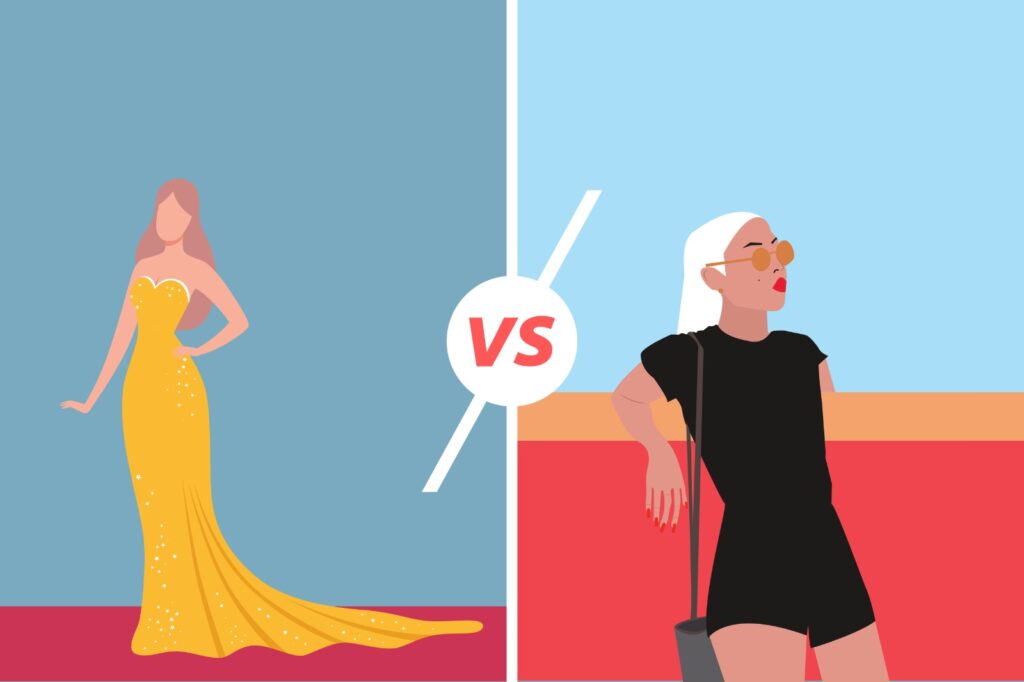
If you run a D2C brand, chances are you’ve had this conversation at least once.
“Should we bring a celebrity on board?”
“Or should we double down on influencers instead?”
On paper, celebrities look tempting. Big faces. Big reach. Big buzz.
Influencers, on the other hand, feel smaller, slower, and sometimes… less glamorous.
But here’s the real question most founders care about (even if they don’t say it out loud):
Which one actually delivers better ROI for a D2C brand?
Not likes.
Not headlines.
Not vanity metrics.
Real, repeatable returns.
Let’s examine it – honestly, practically, and without hype.
The Real D2C Marketing Problem No One Talks About
D2C brands don’t have the luxury of burning money for visibility alone.
You’re dealing with:
- tight margins
- rising ad costs
- pressure to scale profitably
- and constant questions like “Is this even working?”
So when you invest in marketing, it’s not about looking big.
It’s about building demand, trust, and conversions – fast enough to survive and smart enough to scale.
That’s why the influencer vs celebrity marketing debate matters so much in D2C.
Celebrity Marketing: Big Reach, Big Expectations
Let’s start with celebrity marketing.
A celebrity brings instant recognition. People know their faces. They stop scrolling. They pay attention.
Certainly, this approach can be extremely effective, depending on the context.
When Celebrity Marketing Makes Sense
Celebrity marketing can work for D2C brands when:
- The brand already has a strong product-market fit.
- The distribution and supply can handle sudden demand.
- The goal is mass awareness, not immediate ROI
- Budgets are large enough to absorb risk.
For grown-up brands, celebrities can act as amplifiers.
But amplification only works if there’s already something strong to amplify.
Where Celebrity Marketing Breaks for D2C
Here’s where many D2C brands struggle.
- High upfront costs with limited flexibility
- Difficult to directly attribute sales
- One campaign often equals one spike – then silence
- Audiences know it’s paid, so trust is limited
For early to mid-stage D2C brands, celebrity marketing often becomes an expensive branding exercise with unclear returns.
And unclear returns are dangerous in D2C.
Influencer Marketing: Smaller Voices, Stronger Trust
Now let’s talk about influencer marketing – the less flashy, more practical option.
Influencers don’t bring instant fame.
What they bring instead is something far more valuable for D2C brands: trust.
Why Influencers Convert Better
Influencers work because:
- their audience chose to follow them
- recommendations feel personal, not scripted
- content blends naturally into daily consumption
- buying decisions feel validated, not pushed
In D2C, trust shortens the buying cycle.
And influencers sit much closer to that moment of decision.
The Power of Micro and Mid-Tier Influencers
One of the biggest misconceptions is that bigger influencers always perform better.
In reality:
- micro and mid-tier influencers often have higher engagement
- audiences feel more connected
- comments turn into conversations, not just emojis
For D2C brands, this often translates into:
- lower cost per acquisition
- better-quality traffic
- more repeat buyers
That’s real ROI.
ROI: Why Reach Is a Trap for D2C Brands
Here’s where many brands go wrong.
They confuse reach with results.
Celebrity marketing wins on reach.
Influencer marketing wins in action.
D2C ROI is driven by:
- conversions
- repeat purchases
- customer lifetime value
- scalability over time
A million views mean nothing if they don’t turn into customers you can retain.
And this is why influencer marketing often outperforms celebrity marketing for D2C brands – especially in the growth phase.
Cost vs Control: The Difference That Changes Everything
Another overlooked factor is control.
With Celebrity Marketing:
- creative direction is limited
- messaging is often generic
- campaigns are one-off and rigid
With Influencer Marketing:
- content can be tested, iterated, and refined
- multiple creators allow multiple narratives
- partnerships can evolve over time
D2C brands thrive on iteration.
Influencer marketing allows you to learn, adjust, and scale – without betting everything on one face.
The Smart D2C Strategy: Influencers First, Celebrities Later
Here’s the nuance most people miss.
This isn’t an “either-or” decision forever.
The smartest D2C brands:
- Use influencers to build trust, proof, and predictable demand
- Understand what messaging converts
- Fix funnels, logistics, and retention
- Then use celebrities to amplify what already works
Influencers help you find the formula.
Celebrities help you broadcast the formula.
Reversing this order is where most brands lose money.
Common Mistakes That Kill ROI (Fast)
If you want to protect your marketing budget, avoid these:
- Hiring a celebrity before validating demand
- Expecting influencers to fix a weak product or offer
- Chasing views instead of buyers
- Treating influencer marketing as content, not strategy
Neither influencers nor celebrities can save broken fundamentals.
Marketing only scales what already exists.
So… Influencer vs Celebrity Marketing for D2C – Who Wins on ROI?
Let’s answer the question clearly.
For most D2C brands:
Influencer marketing delivers better ROI.
Why?
- Lower cost of experimentation
- Higher trust
- Easier attribution
- Better alignment with D2C economics
Celebrity marketing isn’t bad.
It’s just often used too early.
And in D2C, timing matters more than hype.
Final Thought: Ask This Before Spending a Rupee
Before choosing between influencers and celebrities, ask yourself:
Do we want visibility – or do we want predictable growth?
Because one looks impressive on a pitch deck.
The other builds sustainable businesses.
If you’re a D2C founder planning your next marketing move, pause before chasing big faces.
Sometimes, smaller voices create bigger impact.
And that’s where real ROI lives.